SAFETY DATA SHEET
Collodion, flexible
1. IDENTIFICATION
Product Identifiers
Product Name:
Collodion, flexible
Other Names:
Cellulose nitrate; Guncotton; Nitrocellulose
Product Number(s):
2059,
CAS Number:
9004-70-0
Recommended use of the chemical and restriction on use
Laboratory use
Company Details
ProSciTech Pty Ltd
11 Carlton Street
KIRWAN QLD 4817
Australia(07) 4773 9444www.proscitech.com
11 Carlton Street
KIRWAN QLD 4817
Australia(07) 4773 9444www.proscitech.com
Emergency Contact Details
ProSciTech Pty Ltd
11 Carlton Street
KIRWAN QLD 4817
Australia(07) 4773 9444www.proscitech.com
11 Carlton Street
KIRWAN QLD 4817
Australia(07) 4773 9444www.proscitech.com
2. HAZARDS IDENTIFICATION
Classification of the substance or mixture
Flammable liquids (Category 1), H224
Specific target organ toxicity - single exposure (Category 3), Central nervous system, H336
Specific target organ toxicity - single exposure (Category 3), Central nervous system, H336
Label Elements
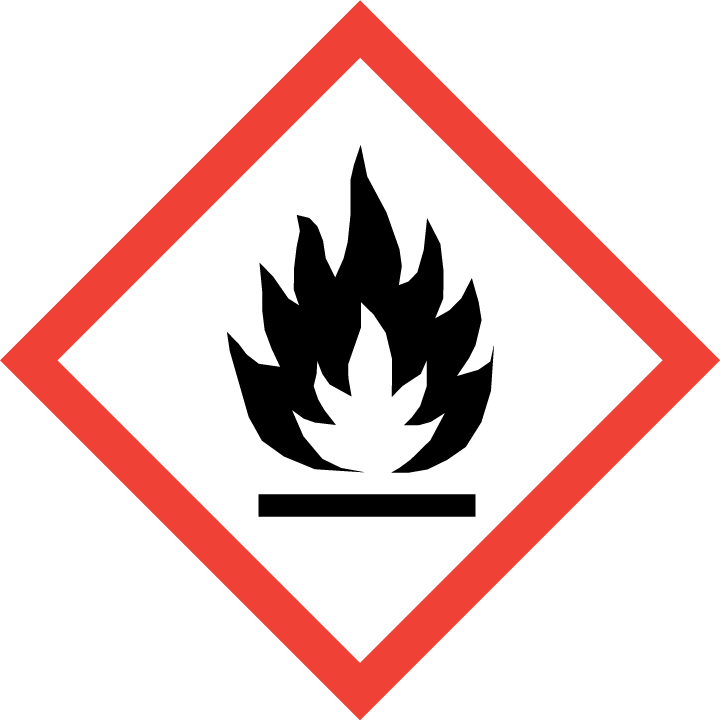

Signal Words
Danger
Hazard Statement(s)
H224 Extremely flammable liquid and vapour.
H336 May cause drowsiness or dizziness.
H336 May cause drowsiness or dizziness.
Precautionary Statement(s)
P210 Keep away from heat, hot surfaces, sparks, open flames and other
ignition sources. No smoking.
P304 + P340 + P312 IF INHALED: Remove person to fresh air and keep comfortable for breathing. Call a POISON CENTER/doctor if you feel unwell.
P403 + P235 Store in a well-ventilated place. Keep cool.
Supplemental Hazard information (EU)
EUH019 May form explosive peroxides.
EUH066 Repeated exposure may cause skin dryness or cracking.
Other hazards
This substance/mixture contains no components considered to be either persistent, bioaccumulative and toxic (PBT), or very persistent and very bioaccumulative (vPvB) at levels of 0.1% or higher.
May form explosive peroxides., Repeated exposure may cause skin dryness or cracking.
ignition sources. No smoking.
P304 + P340 + P312 IF INHALED: Remove person to fresh air and keep comfortable for breathing. Call a POISON CENTER/doctor if you feel unwell.
P403 + P235 Store in a well-ventilated place. Keep cool.
Supplemental Hazard information (EU)
EUH019 May form explosive peroxides.
EUH066 Repeated exposure may cause skin dryness or cracking.
Other hazards
This substance/mixture contains no components considered to be either persistent, bioaccumulative and toxic (PBT), or very persistent and very bioaccumulative (vPvB) at levels of 0.1% or higher.
May form explosive peroxides., Repeated exposure may cause skin dryness or cracking.
Primary route(s) of entry
primary entry point is the skin (topical/dermal application).
It's designed to be painted onto the skin, where the solvents evaporate and leave a flexible film.
Secondary/possible routes (not intended):
Inhalation - solvent vapours during application (ether/alcohol)
Eye contact - accidental splashes
Ingestion - accidental, not intended
It's designed to be painted onto the skin, where the solvents evaporate and leave a flexible film.
Secondary/possible routes (not intended):
Inhalation - solvent vapours during application (ether/alcohol)
Eye contact - accidental splashes
Ingestion - accidental, not intended
Human Health
Inhalation:
No information available
Ingestion:
No information available
Eyes:
No information available
Skin:
No information available
Environment
No information available
3. COMPOSITION/INFORMATION ON INGREDIENTS
Name
CAS No.
Content (w/w)
Classification
Diethyl ether
60-29-7
>= 50 - < 70 %
Flam. Liq. 1; Acute Tox. 4, STOT SE 3; H224, H302, H336
Ethanol
64-17-5
>= 30 - < 50 %
Flam. Liq. 2; Eye Irrit. 2; H225, H319
4. FIRST AID MEASURES
Ingestion
Never give anything by mouth to an unconscious person. Immediate medical attentionisrequired. Do not induce vomiting without medical advice. Get medical attention.
Inhalation
Remove from exposure, lie down. Remove to fresh air. If not breathing, give artificial respiration. Get medical attention.
Skin Contact
Wash off immediately with soap and plenty of water while removing all contaminatedclothes and shoes. Get medical attention. Remove and wash contaminated clothingandgloves, including the inside, before re-use.
Eye Contact
Rinse thoroughly with plenty of water for at least 15 minutes, lifting lower and upper eyelids.Consult a physician. Get medical attention.
Other Information
Ensure that medical personnel are aware of the material(s) involved, take precautionstoprotect themselves and prevent spread of contamination.
Most important symptoms and effects, both acute and delayed - Difficulty in breathing. Inhalation of high vapour concentrations may cause symptomslikeheadache, dizziness, tiredness, nausea and vomiting.
Most important symptoms and effects, both acute and delayed - Difficulty in breathing. Inhalation of high vapour concentrations may cause symptomslikeheadache, dizziness, tiredness, nausea and vomiting.
5. FIREFIGHTING MEASURES
Suitable extinguishing equipment
Water mist may be used to cool closed containers. This material is lighter than water and insoluble in water. The fire couldeasilybe spread by the use of water in an area where the water cannot be contained. Water spray. Carbon dioxide (CO 2). Foam. Drychemical. Cool containers with flooding quantities of water until well after fire is out. Chemical foam. water fog.
HAZCHEM
No information
Special protective equipment and precautions for fire fighters
Use water spray to cool unopened containers.
6. ACCIDENTAL RELEASE MEASURES
Personal precautions, protective equipment and emergency procedures
Use personal protective equipment. Avoid breathing vapours, mist or gas. Ensure adequate ventilation.
Remove all sources of ignition. Evacuate personnel to safe areas. Beware of vapours accumulating to form explosive concentrations. Vapours can accumulate in low areas.
For personal protection see section 8.
Remove all sources of ignition. Evacuate personnel to safe areas. Beware of vapours accumulating to form explosive concentrations. Vapours can accumulate in low areas.
For personal protection see section 8.
Environmental precautions
Prevent further leakage or spillage if safe to do so. Do not let product enter drains.
Methods and materials for containment and clean up
Contain spillage, and then collect with an electrically protected vacuum cleaner or by wet-brushing and place in container for disposal according to local regulations (see section 13).
7. HANDLING AND STORAGE
Precautions for safe handling
Avoid contact with skin and eyes. Avoid inhalation of vapour or mist.
Keep away from sources of ignition - No smoking.Take measures to prevent the build up of electrostatic charge.
For precautions see section 2.2.
Keep away from sources of ignition - No smoking.Take measures to prevent the build up of electrostatic charge.
For precautions see section 2.2.
Conditions for safe storage
Do not store together with oxidising and self-igniting products.
Heat- and air-sensitive.
Storage class (TRGS 510): Flammable liquids
8. EXPOSURE CONTROLS/PERSONAL PROTECTION
Exposure Standards
Engineering controls
Handle in accordance with good industrial hygiene and safety practice. Wash hands before breaks and at the end of workday.
Prevent further leakage or spillage if safe to do so. Do not let product enter drains.
Prevent further leakage or spillage if safe to do so. Do not let product enter drains.
Personal protective equipment
Eye and face protection
Face shield and safety glasses Use equipment for eye protection tested and approved under
appropriate government standards.
appropriate government standards.
Skin protection
Handle with gloves. Gloves must be inspected prior to use. Use proper glove removal technique (without touching glove's outer surface) to avoid skin contact with this product. Dispose of contaminated gloves after use in accordance with applicable laws and good laboratory practices.
Wash and dry hands
Wash and dry hands
Body protection
Impervious clothing, Flame retardant antistatic protective clothing., The type of protective equipment must be selected according to the concentration and amount of the dangerous substance at the specific workplace.
Respiratory protection
Where risk assessment shows air-purifying respirators are appropriate use respirator cartridges as a backup to engine protection, use a full-face supplied air respirator. Use respirators and components tested and approved under appropriate government standards.
9. PHYSICAL AND CHEMICAL PROPERTIES
General information
Appearance
Clear liquid
Odour
Petroleum distillates
pH
Neutral
Vapour Pressure
576 hPa at 20 °C
Density
No data available
Boiling Point
36.1 °C / 97 °F
Melting Point
No data available
Solubility
insoluble
Specific Gravity of Density
Flash Point
-52 °C / -61.6 °F
Flammable (Explosive) Limits
Lower 17 vol%
Upper 36 vol%
Upper 36 vol%
Ignition Temperature
not specified
Formula
not specified
10. STABILITY AND REACTIVITY
Reactivity
None known, based on information available
Chemical stability
May form explosive peroxides. Light sensitive. Risk of explosion by shock, friction, fireorother sources of ignition. Do not distill or allow to evaporate.
Possibility of hazardous reactions
Hazardous Polymerization: No information available.
Hazardous Reactions: No information available.
Hazardous Reactions: No information available.
Conditions to avoid
Heat, flames and sparks. Keep away from open flames, hot surfaces and sources of ignition. Exposure to air. Exposure to light. Incompatible products.
Incompatible materials
None known.
11. TOXICOLOGICAL INFORMATION
Acute effects
Based on available data, the classification criteria are not met
Eye contact
Based on available data, the classification criteria are not met
Skin contact
Based on available data, the classification criteria are not met
Ingestion
Based on available data, the classification criteria are not met
Inhalation
Based on available data, the classification criteria are not met
Toxicity and irritation
May cause skin and eye irritation. Vapors may cause drowsiness and dizziness. Prolonged or repeated exposure may cause skin dryness or cracking.
12. ECOLOGICAL INFORMATION
Ecotoxicity
Contains a substance which is:. Toxic to aquatic organisms. The product containsfollowingsubstances which are hazardous for the environment.
Persistence and degradability
No information available
Persistence is unlikely, based on information available.
Degradation in sewage treatment plant: Contains substances known to be hazardous to the environment or not degradableinwastewater treatment plants.
Persistence is unlikely, based on information available.
Degradation in sewage treatment plant: Contains substances known to be hazardous to the environment or not degradableinwastewater treatment plants.
Bioaccumulative potential
Bioaccumulation is unlikely
Other adverse effects
Persistent Organic Pollutant: This product does not contain any known or suspected substance
Ozone Depletion Potential: This product does not contain any known or suspected substance
Ozone Depletion Potential: This product does not contain any known or suspected substance
13. DISPOSAL CONSIDERATIONS
General information
Waste from Residues/Unused Products
Waste is classified as hazardous. Dispose of in accordance with the EuropeanDirectiveson waste and hazardous waste. Dispose of in accordance with local regulations.
Contaminated Packaging:
Dispose of this container to hazardous or special waste collection point. Empty containersretain product residue, (liquid and/or vapour), and can be dangerous. Keep product andempty container away from heat and sources of ignition.
Other Information:
Do not flush to sewer. Waste codes should be assigned by the user based ontheapplication for which the product was used. Can be landfilled or incinerated, whenincompliance with local regulations.
Waste is classified as hazardous. Dispose of in accordance with the EuropeanDirectiveson waste and hazardous waste. Dispose of in accordance with local regulations.
Contaminated Packaging:
Dispose of this container to hazardous or special waste collection point. Empty containersretain product residue, (liquid and/or vapour), and can be dangerous. Keep product andempty container away from heat and sources of ignition.
Other Information:
Do not flush to sewer. Waste codes should be assigned by the user based ontheapplication for which the product was used. Can be landfilled or incinerated, whenincompliance with local regulations.
14. TRANSPORT INFORMATION
ADG label required
HAZCHEM
No information
UN Number
2059
Proper shipping name
Nitrocellulose, solution, flammable
Transport hazard class
3
Packing group
I
Environmental hazard
No hazards identified
Special precautions for users
No special precautions required.
Additional information
Not applicable, packaged goods
15. REGULATORY INFORMATION
Poisons Schedule Number
Chemical name Hazardous Substances RQs Extremely Hazardous SubstancesRQs
Ethyl Ether 100 lb final RQ -
60-29-7 45.4 kg final RQ
Ethyl Ether 100 lb final RQ -
60-29-7 45.4 kg final RQ
Other Information
For this product a chemical safety assessment was not carried out
16. OTHER INFORMATION
SDS preparation date
3 February 2026
Comments
Full text of H-Statements referred to under sections 2 and 3.
EUH019 May form explosive peroxides.
EUH066 Repeated exposure may cause skin dryness or cracking.
H224 Extremely flammable liquid and vapour.
H225 Highly flammable liquid and vapour.
H302 Harmful if swallowed.
H319 Causes serious eye irritation.
H336 May cause drowsiness or dizziness.
EUH019 May form explosive peroxides.
EUH066 Repeated exposure may cause skin dryness or cracking.
H224 Extremely flammable liquid and vapour.
H225 Highly flammable liquid and vapour.
H302 Harmful if swallowed.
H319 Causes serious eye irritation.
H336 May cause drowsiness or dizziness.
References
ThermoFisher Scientific: Collodion, flexible SDS 6/10/2023 https://www.fishersci.co.uk/store/msds?partNumber=10117872&productDescription=500ML+Collodion%2C+flexible&countryCode=GB&language=en
CDH Collodion Flexible SDS https://www.cdhfinechemical.com/images/product/msds/130_779466358_CollodionFlexible-CASNO-9004-70-0-MSDS.pdf
Spectrum SDS COLLODION, FLEXIBLE, USP 28/02/2024 https://www.spectrumchemical.com//media/sds/CO125_AGHS.PDF
CDH Collodion Flexible SDS https://www.cdhfinechemical.com/images/product/msds/130_779466358_CollodionFlexible-CASNO-9004-70-0-MSDS.pdf
Spectrum SDS COLLODION, FLEXIBLE, USP 28/02/2024 https://www.spectrumchemical.com//media/sds/CO125_AGHS.PDF
This Safety Data Sheet (SDS) has been prepared in compliance with the Preparation of Safety Data Sheets for Hazardous Chemicals Code of Practice February 2016. It is the user's responsibility to determine the suitability of this information for adoption of necessary safety precautions. The information published in this SDS has been compiled from the publications listed in Section 16: to the best of our ability and knowledge these publications are considered accurate. We reserve the right to revise Safety Data Sheets as new information becomes available. Copies may be made for non-profit use.